
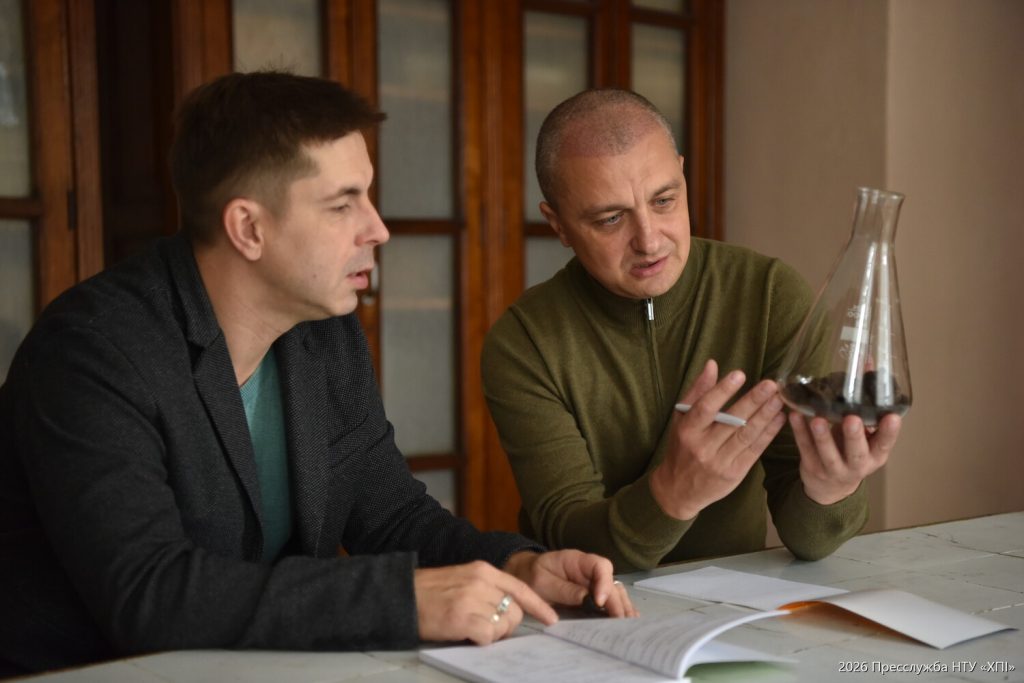
What can be done with brown coal besides burning it? Ukrainian scientists offer an unexpected answer: use it to purify water, help restore soil, modify road bitumen, and create new polymer materials. This is precisely the approach to brown coal, or lignite, being explored by researchers at the National Technical University «Kharkiv Polytechnic Institute» and the National University «Lviv Polytechnic. » According to the experts, the main idea is to process brown coal as thoroughly as possible. In other words, instead of the «extract—burn—generate heat» model, the scientists propose a different one: «research—separate—process—obtain several useful products.» The results of their work are systematized in the monograph «Valorization of Brown Coal Use in «Green» Non-Fuel and Fuel Technologies.»
Ukraine has significant brown coal reserves. Balance reserves are estimated at approximately 2.9 billion metric tons. Major deposits are located in the Dnipropetrovsk, Kirovohrad, and Kharkiv regions, and deposits are also known in other regions. However, large reserves do not mean it is necessary to return to large-scale coal mining and combustion. On the contrary, the modern approach involves first determining exactly what a particular raw material contains and how to use it to maximize benefits while minimizing environmental impact. For the energy sector, brown coal has obvious disadvantages. It contains high moisture content, has a relatively low calorific value, and may contain significant amounts of mineral impurities and sulfur. Moreover, transporting such raw material over long distances is often economically unfeasible. However, what is a disadvantage for the power sector may prove to be an advantage for chemical processing. Lignite contains a significant amount of functional groups and humic substances—complex natural organic compounds that can be extracted, modified, and used to create new materials.
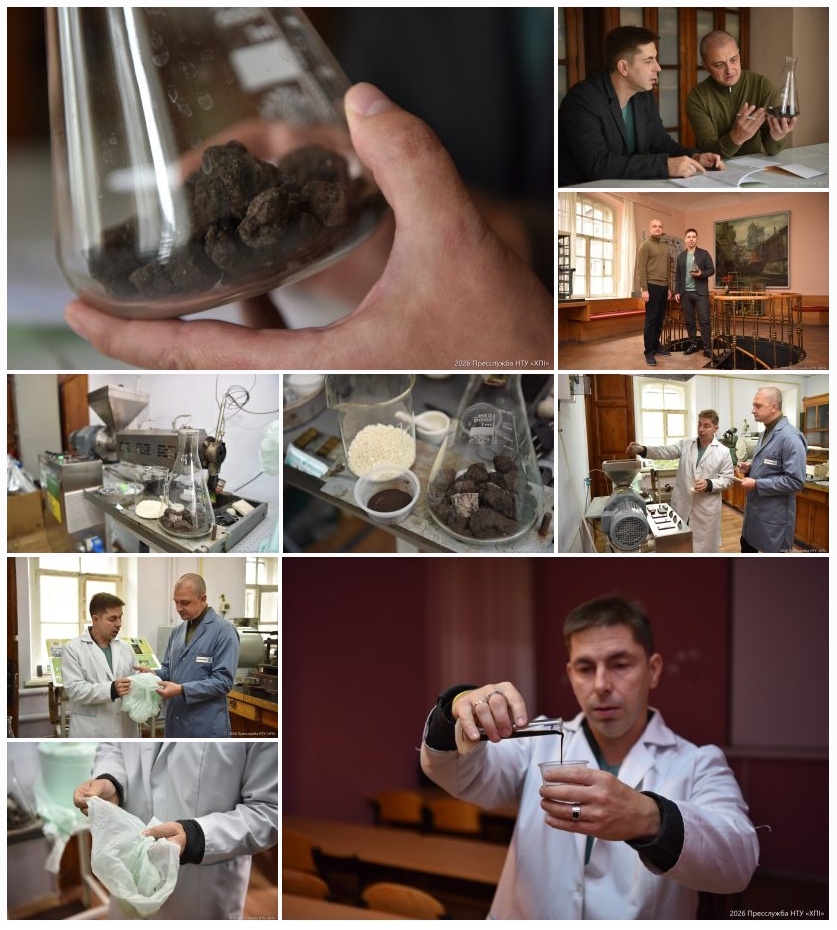
According to research findings, the potential yield of humic acids in some Ukrainian samples ranges from about one-third to nearly half the mass of the analytical sample. In other words, what energy experts might call low-grade fuel, chemists view differently—as a concentrate of natural organic components from which products with higher added value can be derived. It is precisely this shift in perspective on raw materials that forms the basis of research conducted by scientists at the Educational and Scientific Institute of Chemical Technologies and Engineering at the National Technical University «KhPI»: Professor Volodymyr Lebedev of the Department of Technology of Plastic Masses and Biologically Active Polymers; Professor Denys Myroshnychenko, Head of the Department of Oil, Gas, and Solid Fuel Refining Technologies; and Professor Serhii Pyshiev of Lviv Polytechnic National University. According to the experts, the main idea is to process raw materials as thoroughly as possible. In other words, instead of the «extract—burn—generate heat» model, the scientists propose a different approach: «analyze—separate—process—obtain several useful products.» Instead of converting the entire resource into heat and emissions, the scientists propose first separating it into its components and making the most of each one.
From Coal to Clean Water
One of the most promising areas of research is the development of sorbents for removing heavy metals from water. The mechanism is simple: humic substances have active sites capable of binding metal ions. After special processing, lignite is transformed into a material that acts as a kind of «molecular trap.» In laboratory experiments, the sorbents absorbed up to 58 mg of copper, 49 mg of lead, and 42 mg of cadmium per gram of material. Under the conditions studied, this was 25–30% more than the traditional materials used for comparison. Composites of humic acids with iron nanoparticles demonstrated even higher performance. Under laboratory conditions, they achieved up to 97.5% removal of heavy metals in approximately 30 minutes. For now, these are the results of laboratory studies; therefore, before the technology can be put into practical use, further testing on actual wastewater streams is needed, along with verification of the sorbent’s regenerability and an assessment of the safety of the spent material. However, the idea itself is particularly relevant for Ukraine, where water treatment and the remediation of industrial sites are critical challenges.
Not Just Water: Humic Substances Can Also Work with Soil
Another area of research involves the use of humic substances and humates derived from lignite in soils. These compounds can influence the soil’s ability to retain moisture and nutrients, maintain its structure, and promote plant growth. Interestingly, scientists are exploring the possibility of combining humates with products derived from agricultural waste. This would allow a single technological system to utilize two often-underestimated resources at once: lignite and plant biomass. Potentially, such materials could be useful for restoring depleted or damaged land. At the same time, scientists emphasize that humic preparations cannot replace soil analysis, the removal of hazardous contaminants, or proper agricultural practices.
What if we added «coal» to the road?
Another unexpected application is road construction. Humic acids have been studied as an additive to bitumen. According to the results of experiments, adding approximately 2% humic acids at a temperature of about 120 °C can increase the heat resistance of bitumen and slow down its aging. We know that the longer a road surface lasts, the less often it needs to be repaired. And that means lower consumption of bitumen, aggregate, fuel, and energy. There is another interesting example. Resin is formed during certain lignite processing steps. Instead of treating it merely as waste, scientists propose using it as a component for modifying bitumen. A byproduct of one process becomes a raw material for another—this is precisely the principle underlying the circular economy.
From brown coal to biodegradable materials
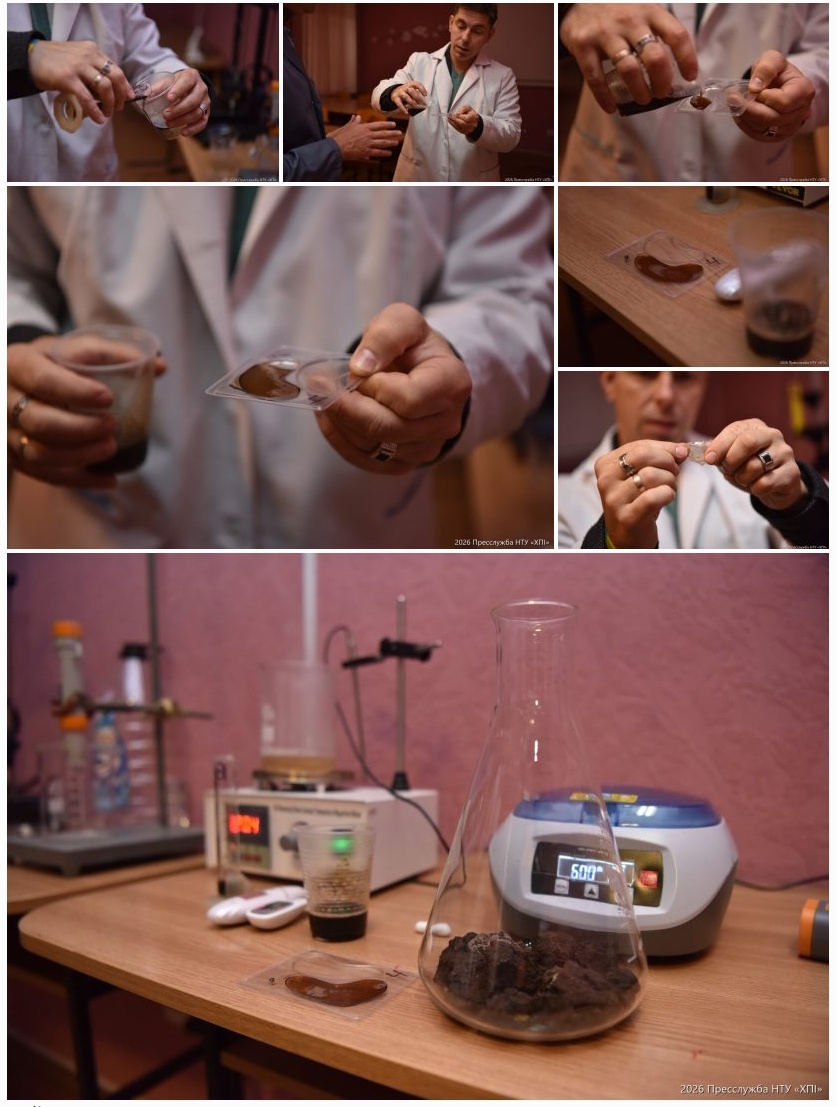
Perhaps the most unexpected area of research is polymeric materials. Scientists are testing humic substances in compositions with gelatin, polyvinyl alcohol, cellulose derivatives, and polylactide. In practice, such materials can take the form of films, bags, containers, hydrogels, and other products. Research is exploring the possibility of creating materials that would combine the necessary performance properties with a potentially shorter lifespan in the environment after use. However, it is especially important not to get ahead of science here: the label «biodegradable» in and of itself guarantees nothing. It is necessary to demonstrate under what conditions, over what period of time, and into what safe components the material decomposes. Rubber-polymer hydrogels for medical use are being studied separately. Additional testing is required for their practical application, particularly regarding strength, stability, biocompatibility, and safety.
Can this be called «green» technology?
This raises a fundamental question: how can a fossil fuel have a «green» future? The scientists’ answer is not simply to make coal mining «green» in name only. The idea is different—to change how the resource is used. If brown coal is simply burned, its organic component is converted mainly into heat and emissions. However, if its components are extracted and used to produce sorbents, materials, or chemical products, greater added value can be derived from the same raw material. However, a technology can only be definitively called «green» after assessing its entire life cycle: from extraction and transportation to the use of energy and reagents, waste generation, and the disposal of the finished product. That is precisely why it may be promising to utilize already disturbed areas, spoil heaps, or raw materials that are economically impractical to transport over long distances.
Why is this particularly important for Ukraine?
For Ukraine, this concept has another dimension. After the war, the country will need technologies for water purification, land reclamation, road repair and construction, waste processing, and the development of its own materials production. In this context, lignite can be viewed not as a return to the «coal age,» but as one of the potential sources of chemical raw materials for local industries. Moreover, transporting wet lignite over long distances is economically unfeasible. Instead, it can be processed closer to the deposit, and the concentrated products – which have greater added value—can then be transported. As a result, a single raw material could potentially form the basis for an entire product line—ranging from sorbents for water treatment to construction materials and polymer composites. And this is precisely the main idea behind the Ukrainian researchers’ work: not simply to find a new use for brown coal, but to learn how to utilize it to the fullest extent possible. Not «extract and burn,» but «research, separate, transform, and utilize.»
Note:
Monograph: Pyshiev, S. V., Miroshnychenko, D. V., and Lebedev, V. V. *Valorizatsiia of Brown Coal Use in «Green» Non-Fuel and Fuel Technologies». Lviv: SPOLOM, 2025. 340 pp.
Monograph in the NTU «KhPI» repository.