
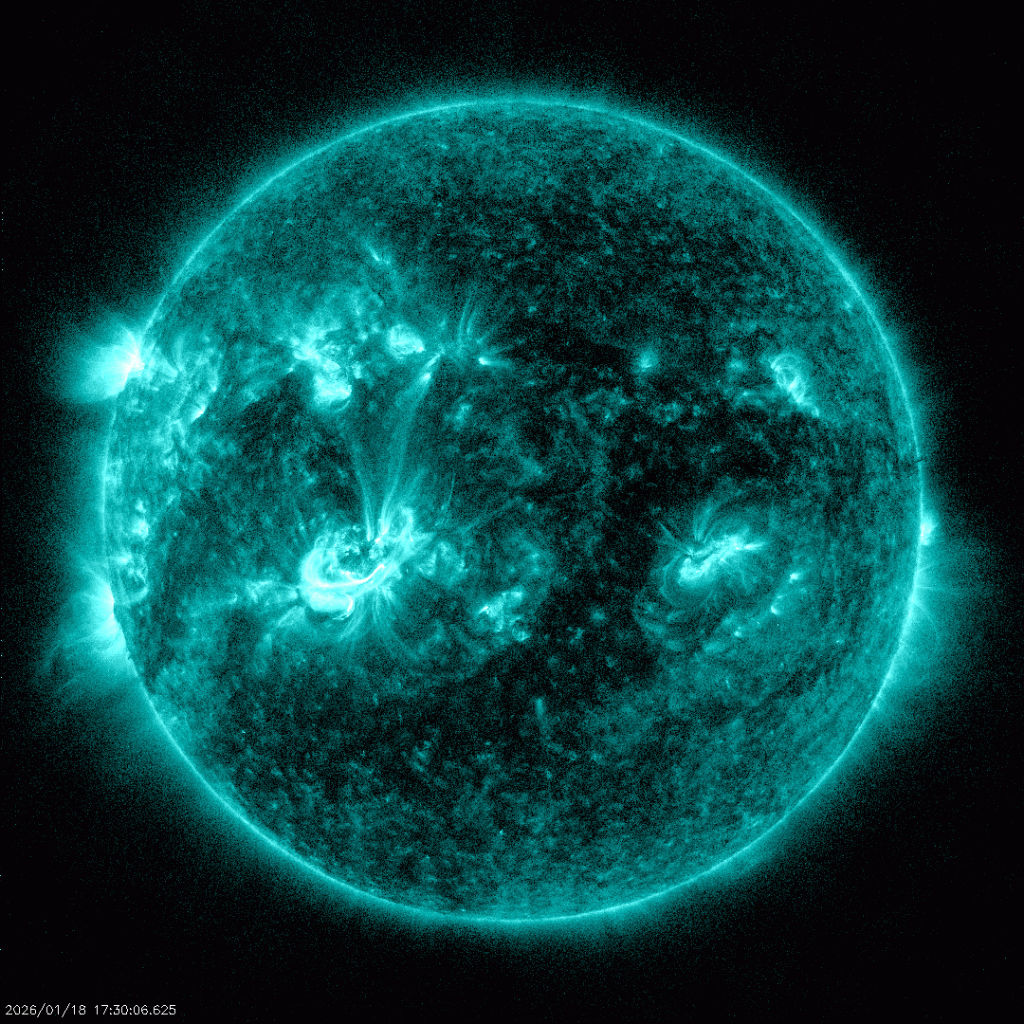
Scientists from the Institute of Ionosphere at the National Technical University «Kharkiv Polytechnic Institute» have joined the team for the SAWA research mission, which is valued at approximately 12 million euros. SAWA will study space weather in low Earth orbit—the region where most modern satellites operate, including those that provide communications, navigation, and the Earth observation. The mission will be a key component of the future European space weather monitoring system, which is being developed as part of the European Space Agency’s Space Safety Program. The program’s main objective is to better understand the interactions between the magnetosphere, the ionosphere, and the upper layers of the Earth’s atmosphere. This will help improve the accuracy of forecasts for space phenomena that can affect the operation of satellite systems and critical ground-based infrastructure.
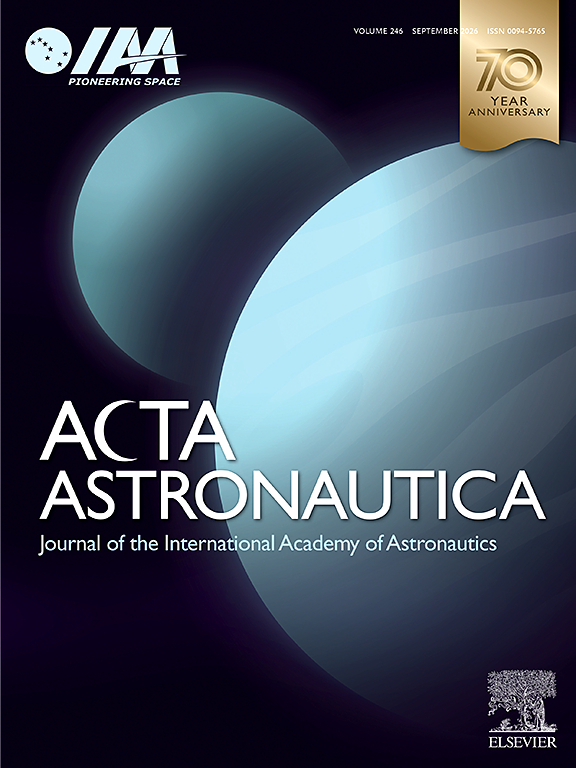
As part of the international space project SAWA (Small Mission for Space Weather Investigations of Magnetosphere–Ionosphere–Thermosphere Coupling), specialists from the Ionosphere Research Institute at the National Technical University «Kharkiv Polytechnic Institute» provided expert recommendations on current challenges in the study of near-Earth space and the forecasting of atmospheric parameters. Their findings helped justify the inclusion in the SAWA equipment of an instrument for measuring the concentration of atomic oxygen—one of the key components of the upper atmosphere that significantly affects the operation of spacecraft in low Earth orbits. The scientific results of the international SAWA team, led by the Space Research Center of the Polish Academy of Sciences, were recently published in the leading international journal «Acta Astronautica»—the official publication of the International Academy of Astronautics.
Scientists at the Institute of the Ionosphere at NTU «KhPI» explain that the state of near-Earth space and its variability—which is linked to solar activity (space weather)—directly affect the safety of critical space systems, in particular by causing satellites to decelerate. «Most people are used to thinking that there is «no air» in space,» says Dmytro Kotov, director of the Institute of Ionosphere at NTU «KhPI.» «And in a layman’s terms, that’s actually true. For example, at an altitude of 500 km, the number of atmospheric particles is hundreds of billions of times smaller than in the air we breathe. Intuitively, it seems that the deceleration of a satellite moving through such an extremely rarefied atmosphere should be very slight. But it all comes down to distance. It’s like gliding across an icy surface: you can pick up speed and travel quite a distance because friction is low, but you’ll still come to a stop. The same thing happens to spacecraft in the atmosphere. Just imagine the enormous distances they travel over the course of their space-faring lives. For example, a satellite in a circular orbit at an altitude of about 500 km (such as the Starlink satellites) completes 15 orbits around Earth in a day. The length of a single orbit is approximately 42,000 kilometers. That adds up to over half a million kilometers in a day! And in a month? And in a year? That’s why satellites experience significant deceleration and need to be periodically “raised” in orbit. And to do that, a satellite needs a fuel supply.»
The conclusion from this story is simple: a satellite’s lifespan depends on the rate of atmospheric drag, and the rate of atmospheric drag depends on the density of the atmosphere. «So, if we want to predict a satellite’s lifespan or calculate the fuel reserves it needs to operate for a certain period in a given orbit, we must have a long-term forecast of atmospheric density,» summarizes Dmytro Kotov. «But scientists have not yet been able to make accurate predictions.» Earlier, we reported on a stunning incident in which 38 Starlink satellites simultaneously fell out of orbit. Our research showed that at that time, the international standard atmospheric model provided an incorrect forecast even during calm space weather. And during solar storms, the situation is particularly complex.»
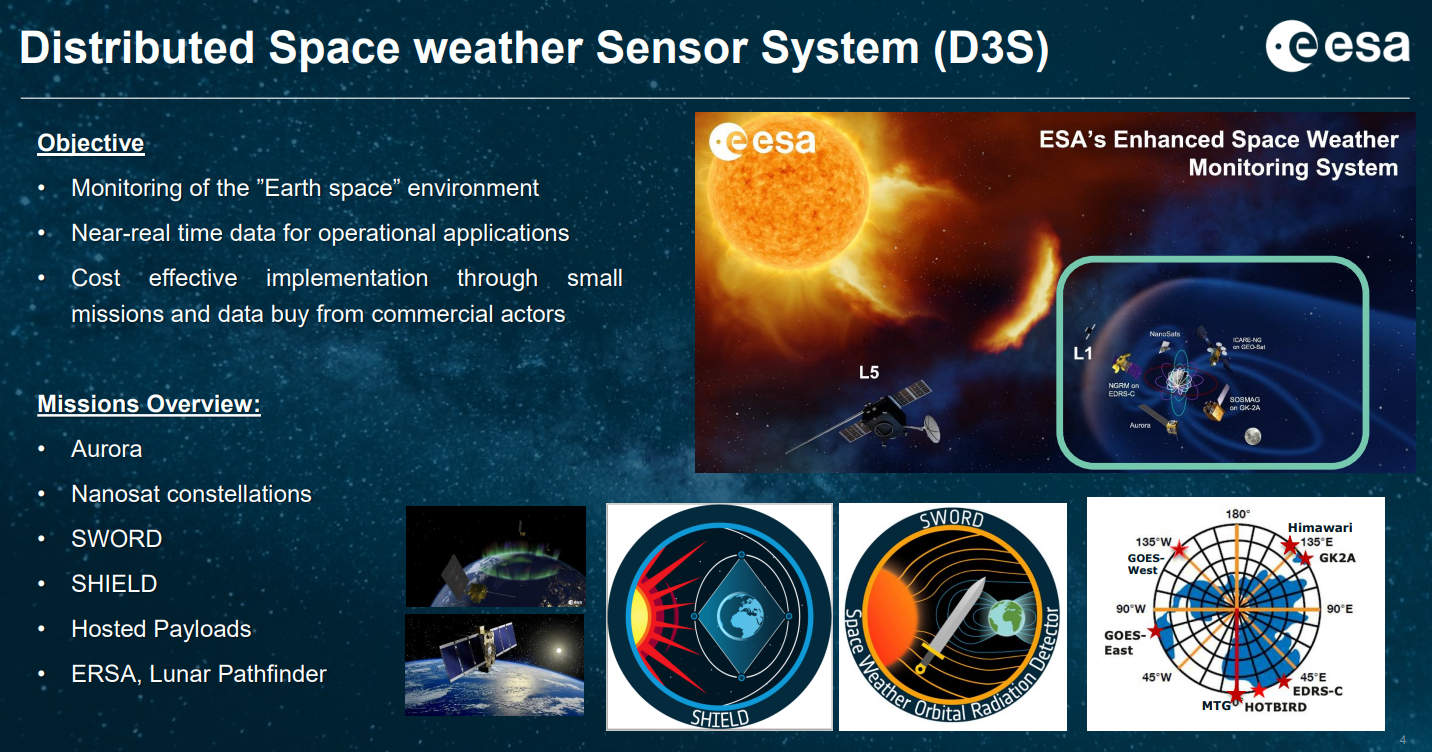
Researchers at the NTU «Kharkiv Polytechnic Institute» note that the safety of satellites in space today is one of the main challenges facing modern technology. «Without confidence in the security of satellites in space, there is no guarantee that space communications and navigation will function as intended when needed. No one needs to be told what this means in today’s world. Any country that seeks to ensure its own security and wants to protect itself from aggressive neighbors must stay one step ahead in space. That is precisely why key global players continue to actively invest in space weather research,» emphasizes Dmytro Kotov, director of the Institute of Ionosphere at NTU «KhPI.» According to him, one such large-scale, long-term initiative was the creation of the European Space Agency’s Space Safety Programme. Its goal is to establish a distributed sensor network for continuous monitoring of space weather. An important part of this European system will be the SAWA (Small Mission for Space Weather Investigations of Magnetosphere–Ionosphere–Thermosphere Coupling) satellite project. The nanosatellite, costing about 12 million euros, is scheduled to be launched into a circular Earth orbit at an altitude of approximately 550 km in early 2029.
SAWA will study the complex physical processes of interaction between the Earth’s magnetosphere, ionosphere, and thermosphere. The data obtained will help scientists better understand how near-Earth space is changing, improve space weather models, and enhance the reliability of satellite systems. «Colleagues from the Space Research Center of the Polish Academy of Sciences, the SAWA project coordinator, approached us for expert advice on current challenges in thermosphere research and forecasting,» says Dmytro Kotov. «We helped justify the inclusion of an atomic oxygen concentration meter—nicknamed ANDREW—in the SAWA research equipment. Atomic oxygen is the main component of the atmosphere at altitudes around 500 km, and thus the primary «brake» on satellites flying at these altitudes. But oxygen’s impact on space weather and satellite systems doesn’t stop there. We’re eagerly awaiting the SAWA data because we have ideas on how to derive something fundamentally new from it.»
Researchers at the Institute of the Ionosphere are open about their excitement at working with the SAWA team. «It is an honor for us to contribute to the development of European infrastructure for space weather monitoring,» notes Dmytro Kotov. «It is no less an honor to be co-authors of the SAWA team’s publication in the legendary journal «Acta Astronautica», the official publication of the International Academy of Astronautics, which was founded by Theodor von Kármán, the father of modern aerodynamics.» Acta Astronautica publishes approximately 600 scientific articles each year, of which only one or two are prepared with the participation of Ukrainian researchers. But that’s not the most important thing. Scientists like to say that their scientific findings deepen our understanding of the world we live in. And that’s true. But the results of the SAWA mission will do much more—they will help protect the world. The world of Ukraine. The world of our partners. The world of the future.»
Note:
SAWA (Small Mission for Space Weather Investigations of Magnetosphere–Ionosphere–Thermosphere Coupling) is a future satellite mission of the European Space Agency aimed at studying space weather and investigating magnetosphere–ionosphere–thermosphere interactions. The launch is scheduled for early 2029. The Space Research Center of the Polish Academy of Sciences is leading the SAWA project.
Acta Astronautica is the official journal of the International Academy of Astronautics, which publishes original works in the fields of fundamental engineering, biology, and social sciences, as well as technologies related to peaceful space research, its use for the benefit of humanity and the advancement of science, and the concepts, design, development, and operation of space-based and ground-based systems. It was founded even before the start of the space age (in 1955).
The International Academy of Astronautics is an international non-governmental organization that brings together leading scientists and engineers in the field of space research. It was founded in 1960 on the initiative of Theodore von Kármán.
The article was published: https://www.sciencedirect.com/science/article/pii/S0094576526003693