
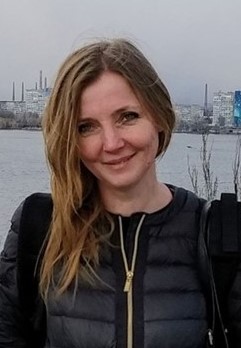
 Head of The Department
About Department
The department has a modern material base. As part of the reference center of modern technologies in metallography and materials science, that was opened for the first time in Eastern Ukraine, the department has installed a set of optical microscopes produced by the German company Carl Zeiss. Automated workplaces with unique specialized software were created for digital image processing. High-resolution transmission electron microscopes, specialized X-ray diffractometers, etc. are used for nanostructural studies.
The study of the physic-mechanical properties of materials is carried out on automated equipment for testing materials in the mode of active stretching and relaxation, measuring hardness, toughness tests, etc. The vacuum laboratory is equipped with installations with oil and oil-free means for pumping. This allows to obtain various materials and coatings in vacuum by ion-plasma, vacuum-arc, thermal and electron-beam evaporation technique, including nanomaterials and materials with amorphous-cluster structure.
The equipment of the specialized laboratory allows to conduct all types of thermal and thermochemical treatment: in vacuum and protective media, surface hardening with high-frequency currents, boronizing, cementation, carbonitriding, etc.
The department trains bachelors and masters in the specialty G8 (formerly 132) “Materials Science” according to the educational program “Applied Materials Science and Advanced Technologies”. Over 40 disciplines are taught, which include mastering the basic knowledge of the modern level on the management of the structure and properties of materials such as ferrous, non-ferrous and precious metals and alloys, functional coatings. Knowledge is given on the methods of examination of structures, as well as materials science of the jewelry and artistic and decorative industries. It provides practical experience in the field of thermal, thermomechanical, thermochemical, ion-plasma, micro-arc and other modern methods of processing materials.
In training, modern computer technologies are used to analyze the structure, mathematical modeling of impacts, and automate the processes of creating new materials at the macro, micro, and nano levels. There is an in-depth study of foreign languages, including in the direction of the chosen specialization; the development of methods of technical creativity and patenting of inventions and protection of intellectual property; practical training at modern enterprises of Ukraine and abroad.
Scientific fields
- Structural engineering of nanomaterials;
- Using the method of vacuum condensation for the creation of new composite materials with low solubility of components or with complete mutual insolubility (pseudo-alloys);
- Strengthening the working surface of valve materials and alloys on their basis by the method of microarc oxidation (MAO);
- Improving the technology of surface hardening with high-frequency currents, its reproduction by welding, thermal and chemical-thermal treatment (TT and CTT) methods;
- Innovative technologies for hardening the surface layers of machine parts and tools by thermochemical treatment (CTT: boronizing, nitriding, cementation, carbonitriding, etc.);
- Innovative technologies for strengthening surface layers of machine parts and tools by the method of thermal friction strengthening (TFS);
- Production and research of materials with a ultramicrocrystalline (UMC) structure and composites based on them using stress relaxation technique and their hardening methods;
- Computational Materials Science.
Qualifications and Areas of Specialization
- Specialty: G8 «Materials Science»
- Educational program: «Applied materials science and advanced technologies»