
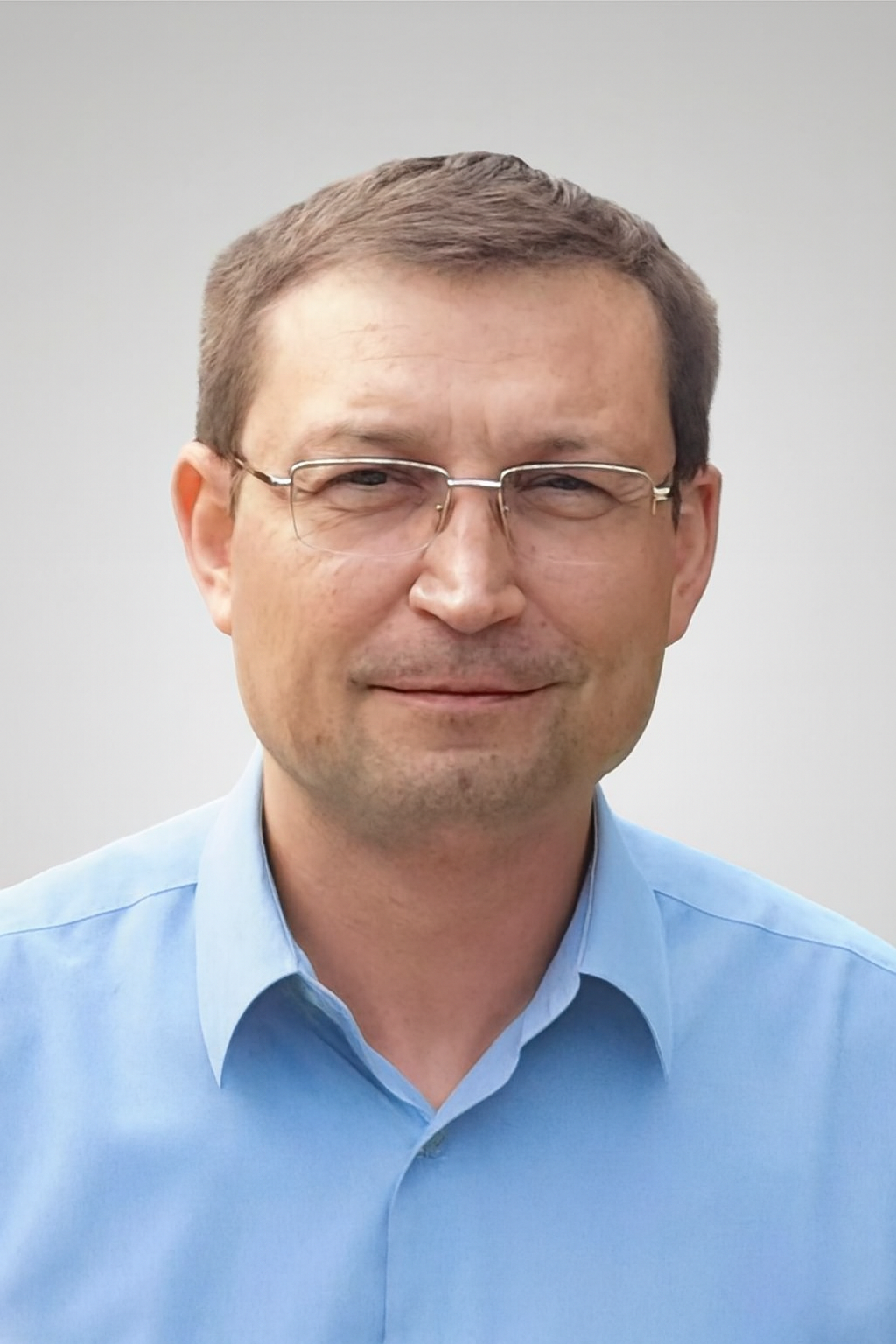
 Head of The Department
About Department
The Department of Energy Machinery Engineering named after G.F. Proskura is the successor to three leading scientific and educational schools of NTU “KhPI” – Hydraulic Machines, Turbine Engineering, and Steam Generator Engineering. Its history combines the legacy of Academician G.F. Proskura, founder of the first Department of Hydromechanics in Ukraine (1914), the development of turbine technologies, and decades of expertise in training specialists for thermal and nuclear power engineering. On this foundation, a powerful educational and research center for modern energy engineering has been established.
Today, the department provides comprehensive engineering training in the design, analysis, and operation of hydraulic machines, steam and gas turbines, steam‑generation systems, and advanced power facilities. The academic staff combines strong scientific potential, practical industrial experience, and expertise in modern digital modeling technologies.
During their studies, students master computer graphics, numerical simulation methods (CFD, FEM), computer-based diagnostics of hydraulic, thermal, and turbomachinery equipment, principles of digital hydraulics and hydraulic/pneumatic drives, as well as technologies for automated control of energy systems. Significant attention is devoted to modeling processes in turbomachine flow paths, heat‑engineering systems, and power units of thermal and nuclear power plants. Students work with modern software tools such as SolidWorks, Inventor, ANSYS, and others.
Scientific fields
The department develops research in the following areas:
- renewable energy;
- mathematical modeling and optimization of hydraulic and turbomachines;
- studies of processes in steam and gas turbines, thermophysical and gas‑dynamic investigations;
- optimization of technological processes in thermal and nuclear power units using simulation modeling;
- analysis of emergency modes in hydro‑ and turbo‑units and improvement of their reliability;
- development of methods and models for automated decision‑support and diagnostics of energy systems;
- resource‑efficient and environmentally oriented technologies in power engineering;
- hydraulic and pneumatic drives.
The department maintains close cooperation with enterprises of Ukraine’s energy sector, providing students with opportunities for internships, thesis projects, and future employment.
Qualifications and Areas of Specialization
Specialties and Educational Programs
Specialty G4 – Power Generation (by specialization)
Specialization G4.03 – Renewable Energy Sources and Hydropower
Educational Program: “Hydropower Engineering”
Research Area: “Computer Engineering in Renewable Energy”
Specialty G9 – Applied Mechanics
Educational Program: “Modeling of Technical Systems”
Research Area: “Robotics, Mechatronics, Hydraulic and Pneumatic Drives”
Specialty G11 – Machine Engineering (by specialization)
Specialization G11.02 – Engines and Power Plants
Educational Program: “Engines and Power Plants”
Research Areas:
“Digital Engineering of Energy Machines and Equipment”
“Design, Operation, and Maintenance of Equipment for Nuclear and Thermal Power Plants”
Specialization G11.03 – Technological Machines and Equipment
Educational Program: “Machines and Equipment for Technological Processes”
Research Area: “Machines and Mechanisms for Oil and Gas Industries”